Behind the Scenes of Metaphotography
A practical demonstration of metaphotography in action.
This text does not define metaphotography as a general method or aesthetic category. It documents a single, personal implementation of an aesthetic protocol through one specific constraint: a vertical camera movement performed once, at the moment of exposure. The purpose of this text is not explanation, but demonstration, showing how meaning emerges when a decision is made under irreversible conditions (Aesthetic Protocol).
In this article, I explore how abstract photography, created through a deliberate physical action, can be interpreted and understood. I focus on Disruptive Exposure — a photographic series that forms part of my ongoing investigation into the role of human-made photography in the age of artificial intelligence. Through this series, I examine what becomes visible when attention overtakes the apparatus, how a decision functions under constraint, and why the act of capture itself becomes a site where meaning is formed.
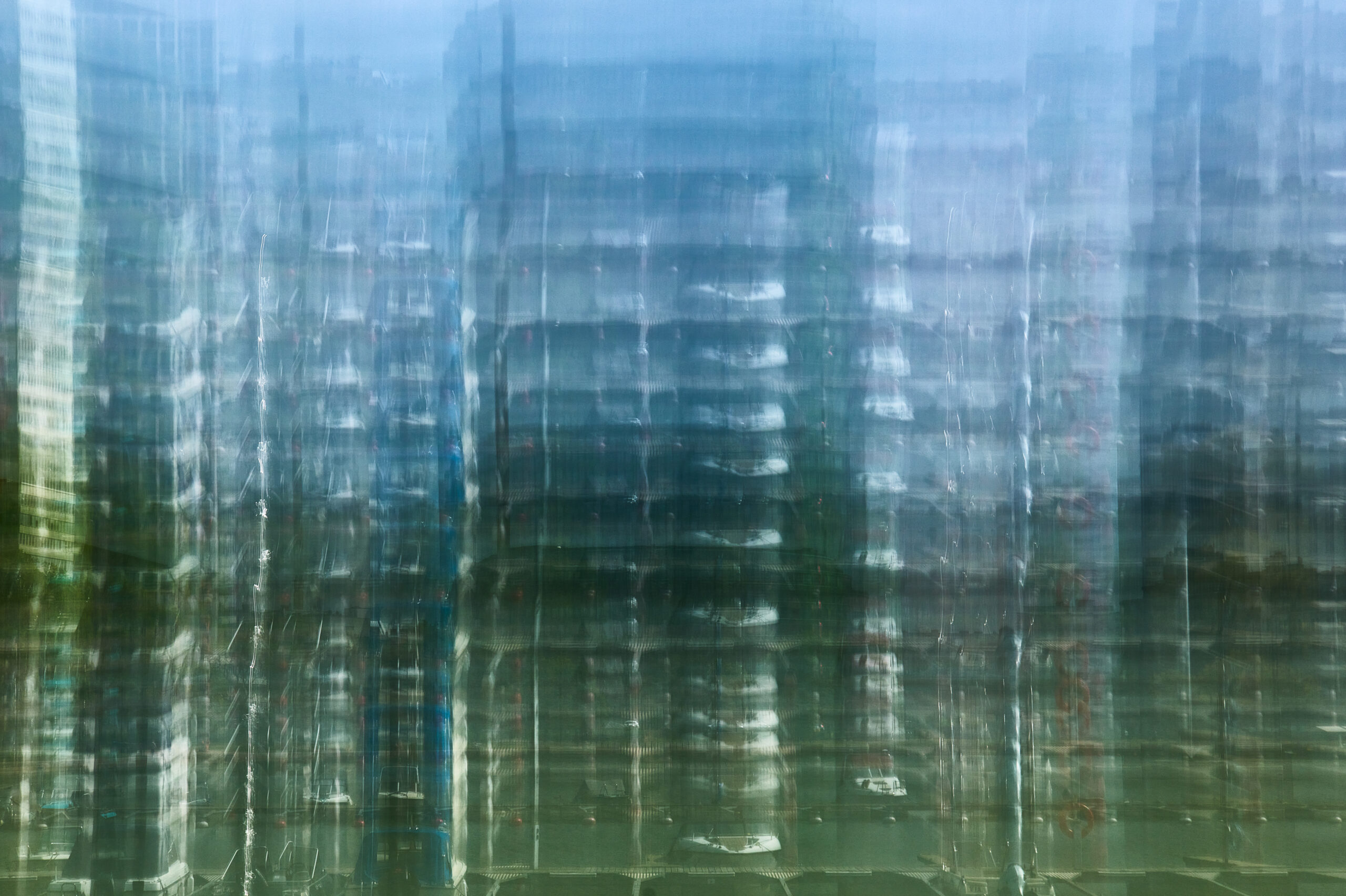
Skyline Disassembled
A repeated gesture creates a multi-layered composition, turning a picturesque pier with boats into a cluster of glass skyscrapers.
Disruptive Exposure is part of a broader inquiry into the future of photography made by human hands at a time when images are increasingly produced through automated systems. Against this backdrop, spontaneity is not a matter of chance but a research condition — a way to test an idea in field conditions. What remains of the city when the image is shaped by a decision, not by an algorithm?
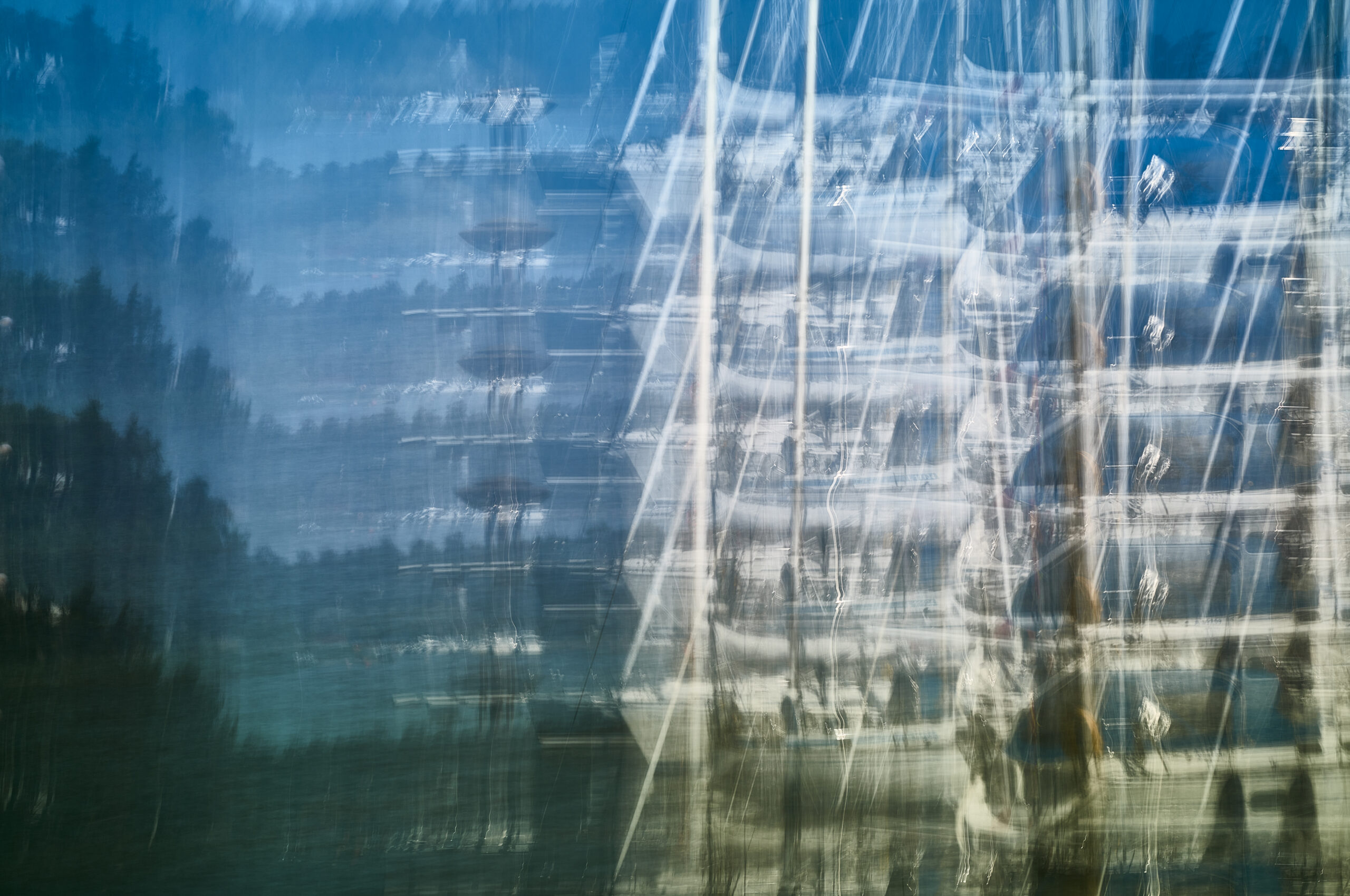
Picturesque Displaced
Yachts, the shoreline, and the silhouette of a water tower in the distance turn a tranquil view into an abstract rhythm with a trace of urbanization.
In urban landscapes, perception is often reduced to recognition. We register the general scene, identify familiar landmarks, and move on. This series emerged as a way to resist that rhythm. A single vertical movement of the camera compresses the image, transforming the duration of an action into a spatial structure (Temporal Compression), replacing the usual ease of perception with a denser visual field that demands time.
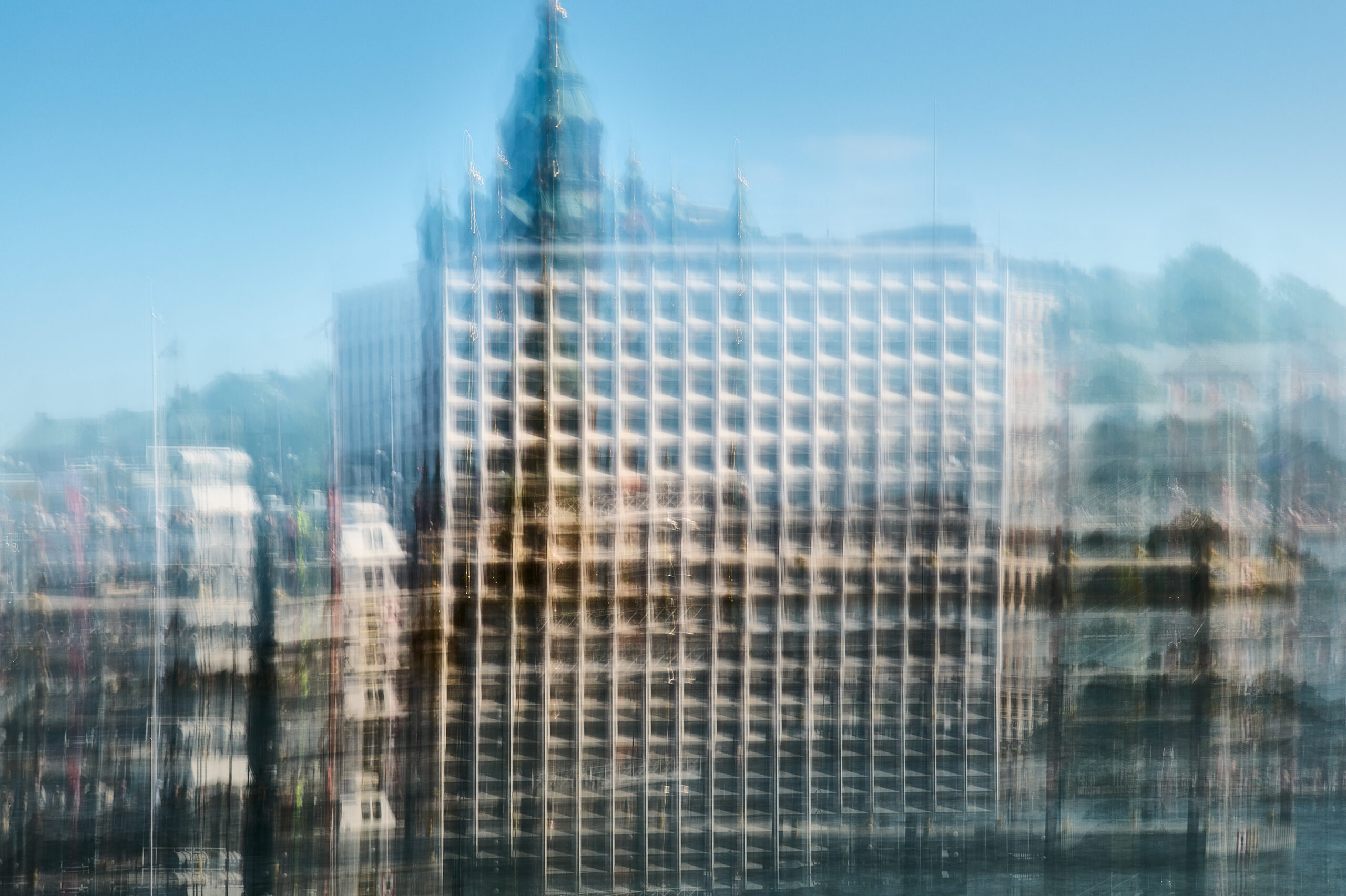
Sightseeing Reflected
The horizon, a hilly urban landscape, the shoreline, and its reflection merge into a single rhythm through camera movement.
At the core of Disruptive Exposure is a single vertical camera movement, performed once and irreversibly at the moment of capture. The scene fractures into layers, while fragments of form and contour remain present within the frame. Familiar urban views such as harbors, facades, and waterfronts are transformed while retaining an indexical connection to the place from which the image emerges (Indexical Trace). Abstraction here remains anchored in the trace of a physical act.
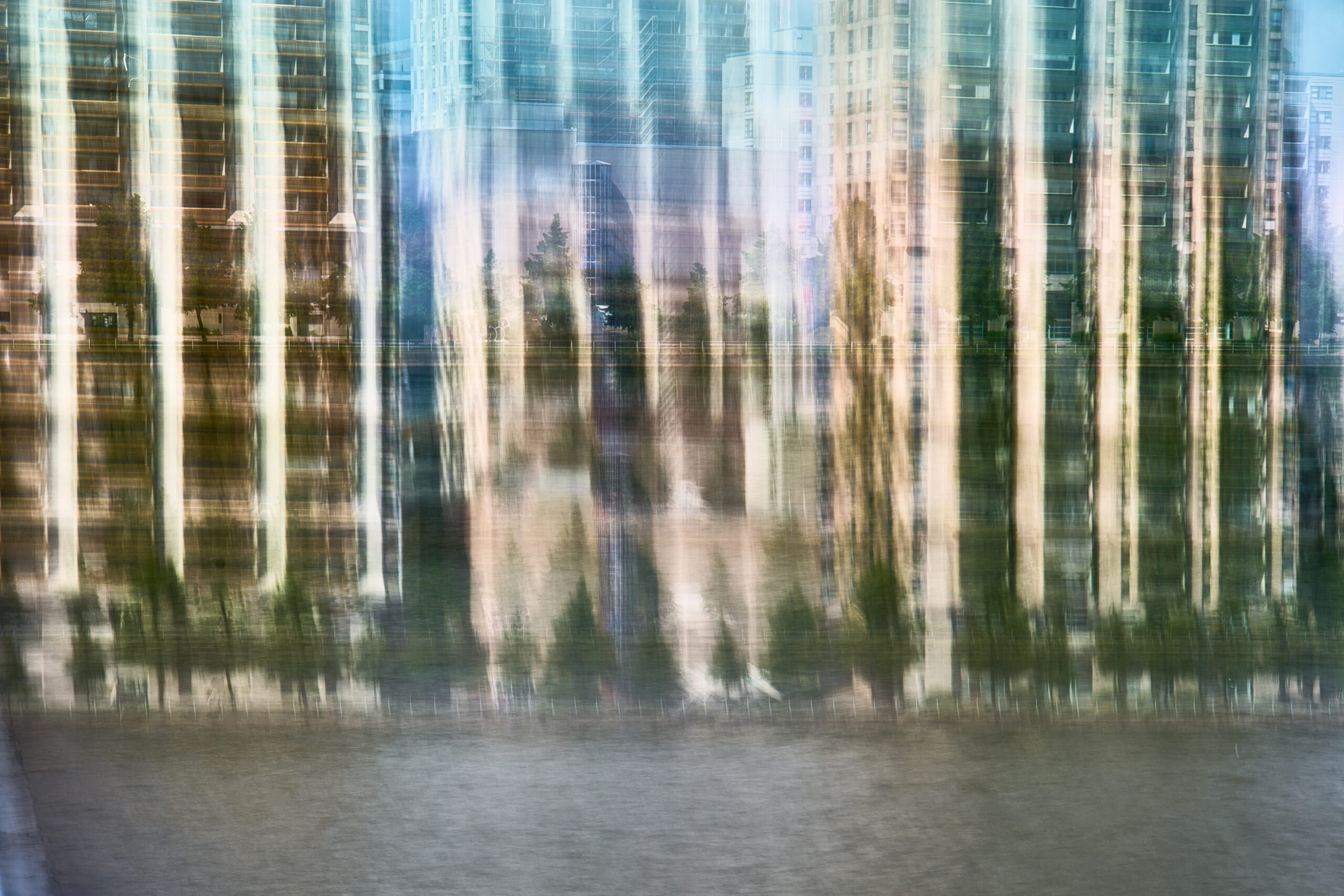
Concrete Drift
Camera movement blurs the rigid shapes of architecture, preserving rhythm and dynamics while making them fluid.
Each image captures a moment in which a stable cityscape gives way to overlays and shifts. The same constraint operates across different situations, altering spatial rhythm, displacing reflections, and producing projections that move between recognition and disruption. Variation emerges from the encounter between a fixed action and changing conditions.

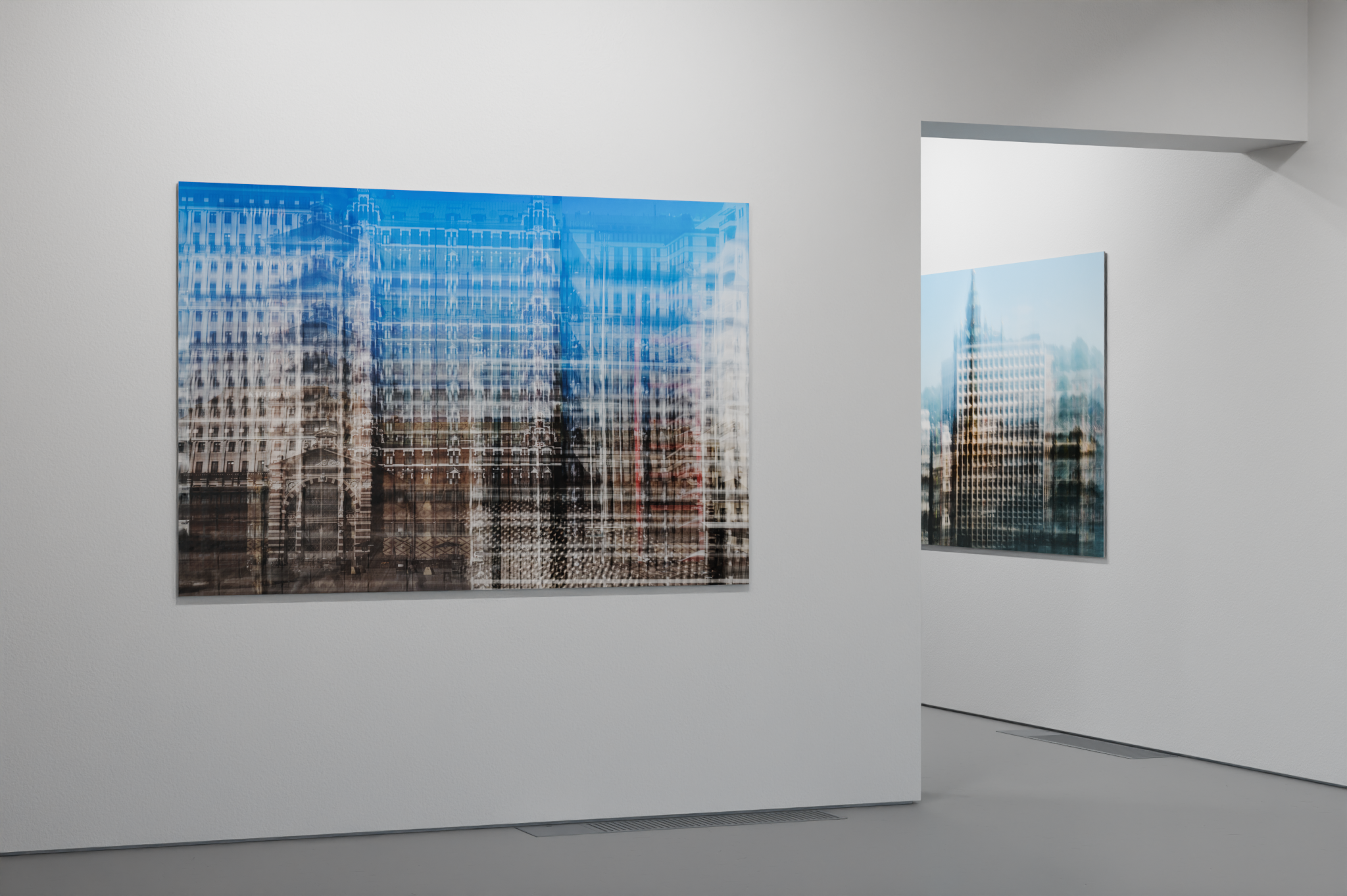
City Multiplied
Historic urban architecture with its unique rhythm transforms into a grid of repeating elements, breaking the usual architectural connections.
These works are experienced at scale. Proximity restores details that disappear in digital circulation. Abstraction becomes a space where the eye can pause, allowing relationships between form, color, and contour to reassemble without immediate resolution.
In this context, abstraction functions as a condition that slows attention and redirects it away from instant recognition. The image approaches the limit at which photographic structure remains intact while recognizability begins to fracture (Optical Threshold).
Through Disruptive Exposure, meaning is constructed through a single decision made under constraint. The action produces a trace whose irreversibility anchors the image in a specific event. What remains is the record of an encounter that cannot be repeated or optimized.
This text is based on an essay originally published on Full Frame Magazine, Aug 3, 2025
Related articles: Theory of Metaphotogrpahy
Related projects: Disruptive Exposure