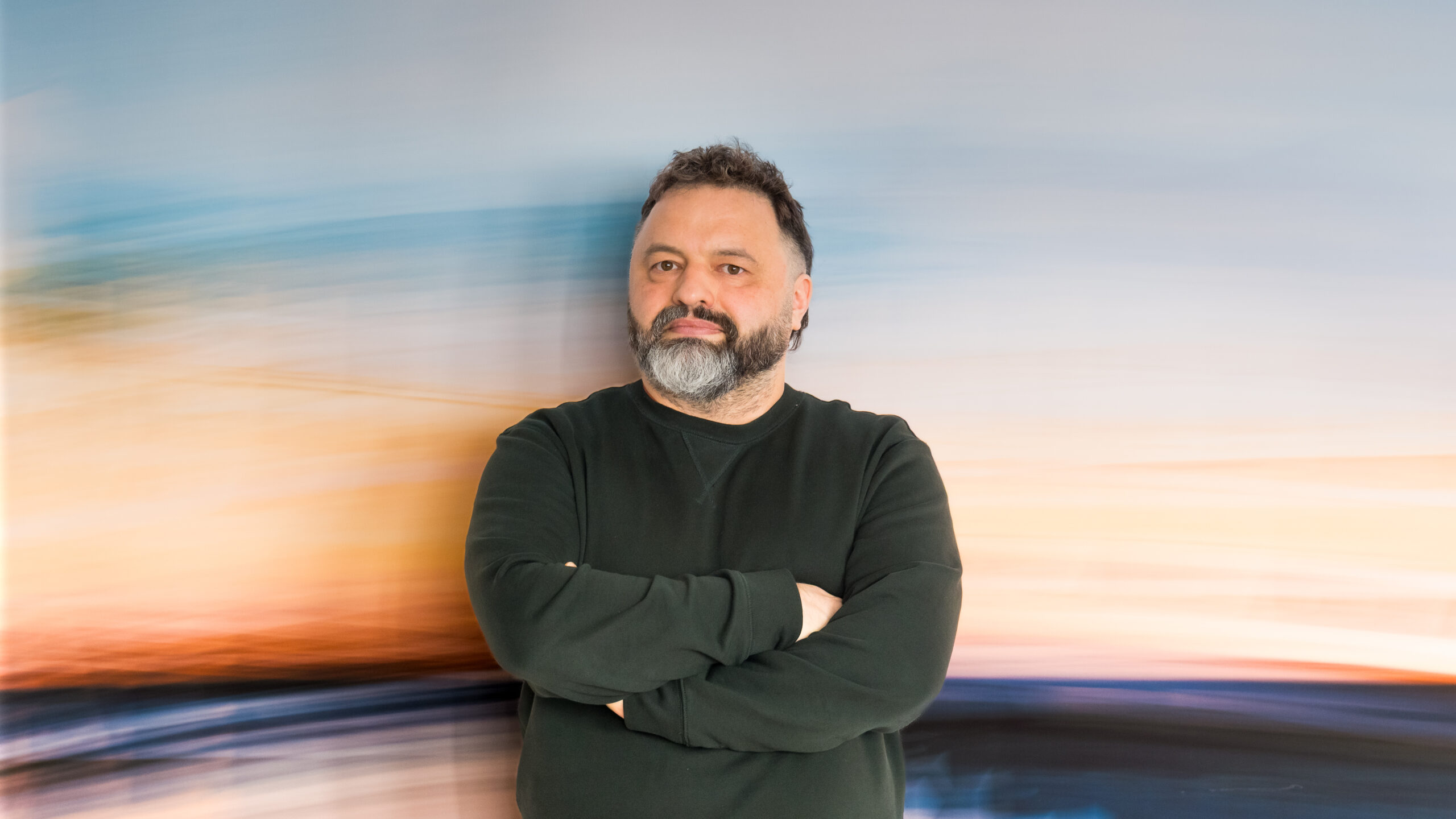
Artistic Statement
After stepping away from a twenty-year career in visual communication, I returned to the image as a way of seeing. This was not a departure into art, but a return to an artistic mode of thinking that existed before professional design and branding. Photography became a chosen instrument, not as a neutral tool, but as a way to work with reality through time, movement, and attention.
My practice grows out of artistic traditions, altering how painting and photography are perceived, shifting attention from description toward experience. From the freedom of the Dadaists and the Irascible 18 to photographers such as Ernst Haas, Saul Leiter, and Wolfgang Tillmans, these approaches opened a space where the image could operate beyond illustration or persuasion. What I carry forward from this lineage is not style, but an understanding of how an image can register presence.
I began working with gesture and movement long before metaphotography existed as a concept. The practice came first. The theory emerged later as a way to articulate, test, and develop what was already taking place in the work. Metaphotography did not lead the images. It was formed in response to them.
In my work, the image takes shape during the act itself. The camera records a specific duration in which light, time, and movement converge into a single, unrepeatable event. What remains is a visible trace of that encounter. The image does not explain what was in front of the camera. It confirms that something took place.
In a time shaped by acceleration, automation, and artificial intelligence, I work against speed by choice. As simulation becomes increasingly precise and images grow interchangeable, I turn toward the physical conditions of the photographic act. My images are not simulations. They are encounters. They do not describe the world. They register contact with it.
Materiality and scale are essential, not for spectacle, but for access. Print allows details to surface that disappear on screens. In close proximity, attention slows. The image unfolds through rhythm, density, and variation, becoming a space of experience rather than a surface to consume.
Because each photographic event is singular and irreversible, final works are presented as Edition 1/1 in author-specific sizing. The print is not a reproduction. It is the terminal form of the process, where the trace becomes physically fixed, and presence becomes perceptible.
I do not work within fixed disciplinary borders. I do not construct images from nothing, nor do I simply capture what is already given. I work with what exists, shaping it through duration and motion. The image becomes a residue of the act, abstract yet grounded in reality. What you see has happened, but only once.
My images do not declare. They ask.
Recognition
Public artistic activity since April 2025:
Full Frame magazine — contributor since May 2025.
Artsper — featured artist since May 2025, presented as “new and remarkable.”
FStoppers — Photographer of the Month (June 2025); Picture of the Day; Editor’s Choice; Photographer of the Year nominee.
Der Greif — selected by curators for the Guest Room What (Dis)Appears, July 2025.