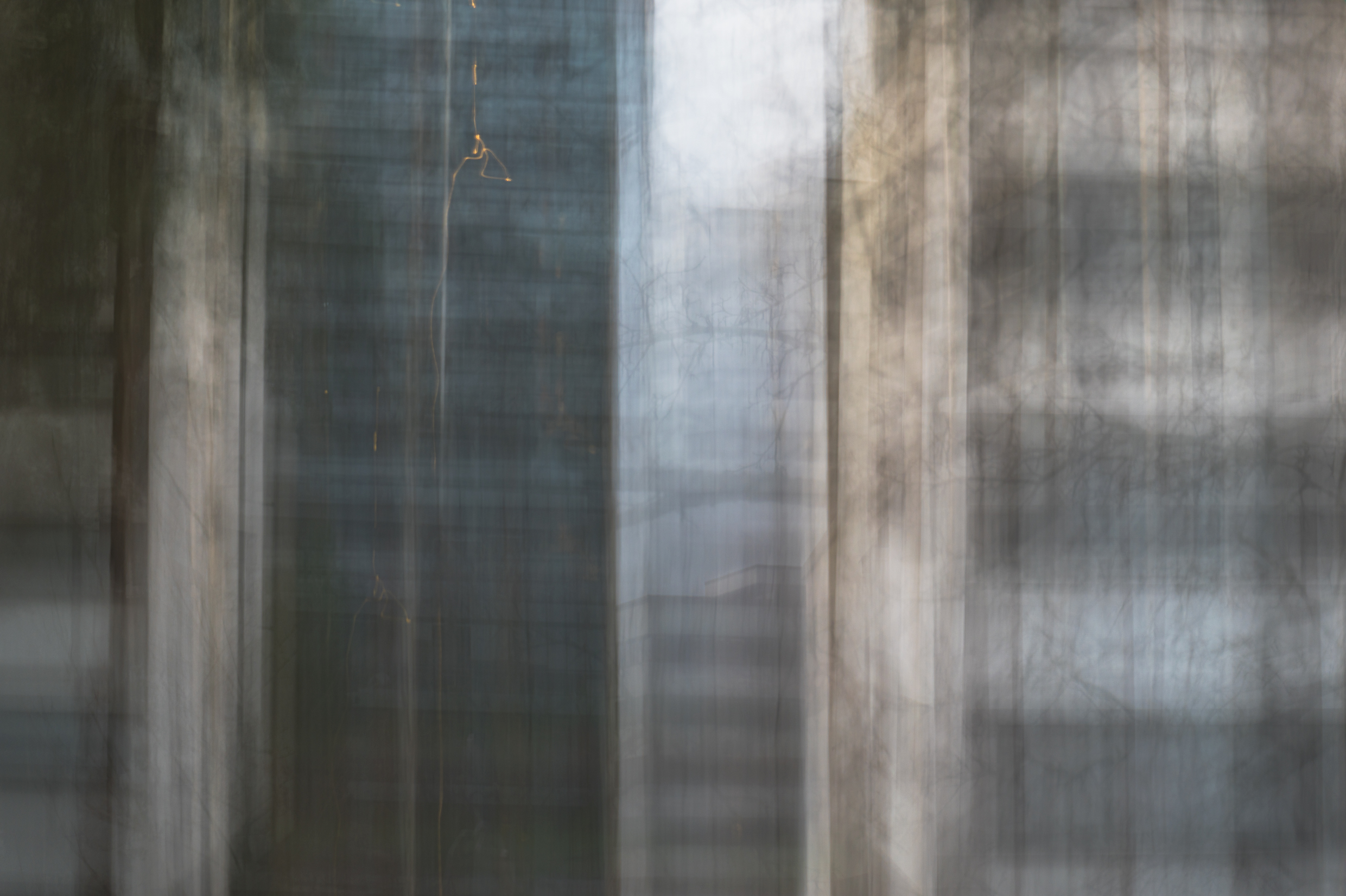
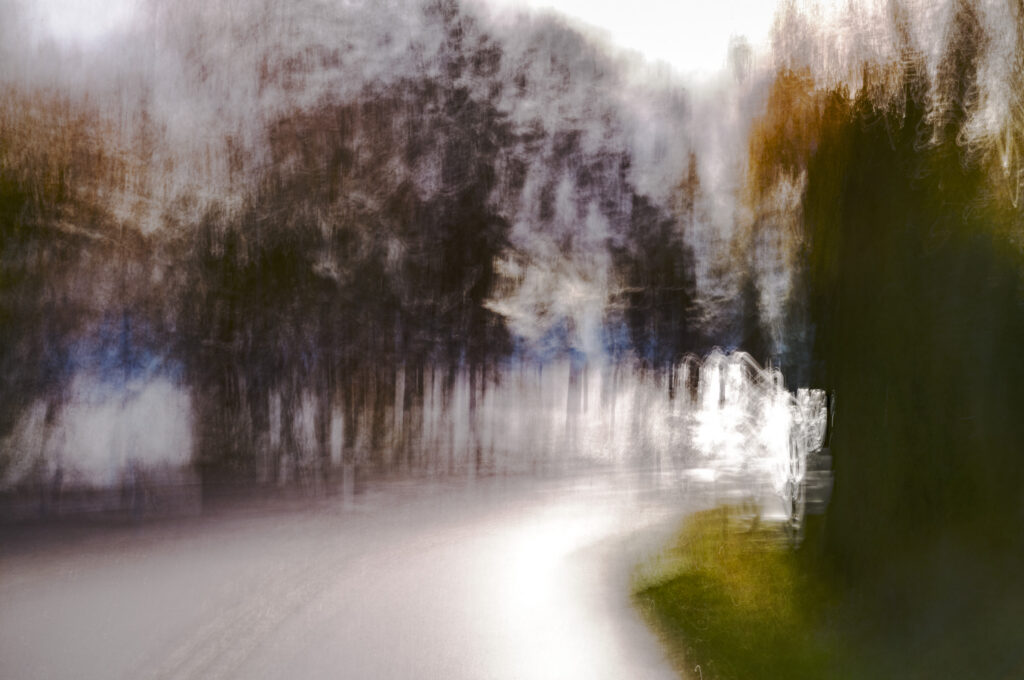
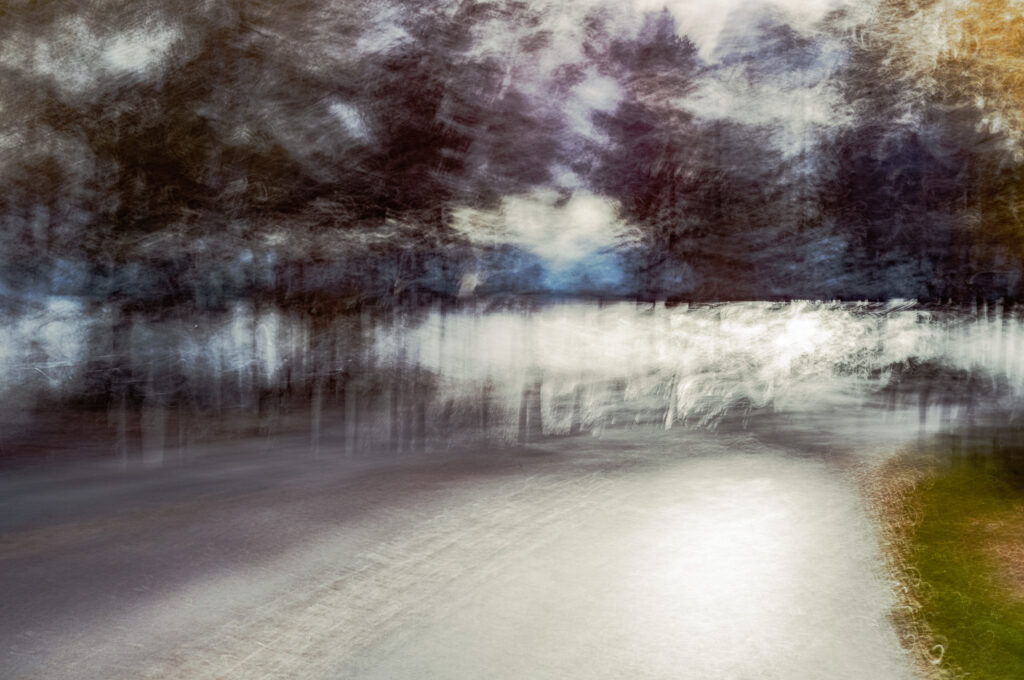
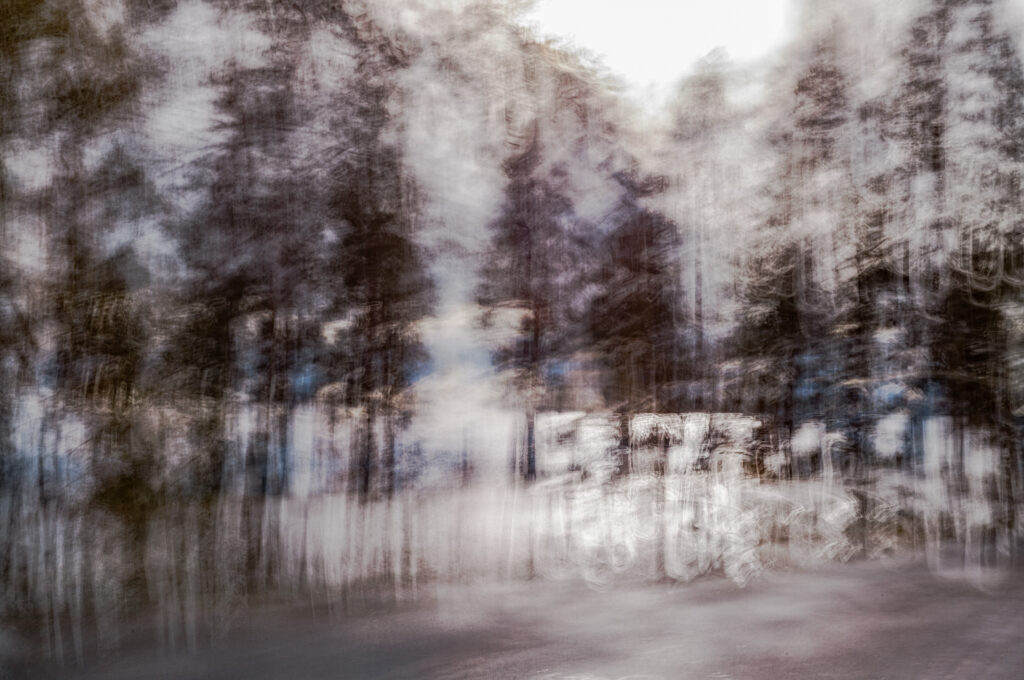
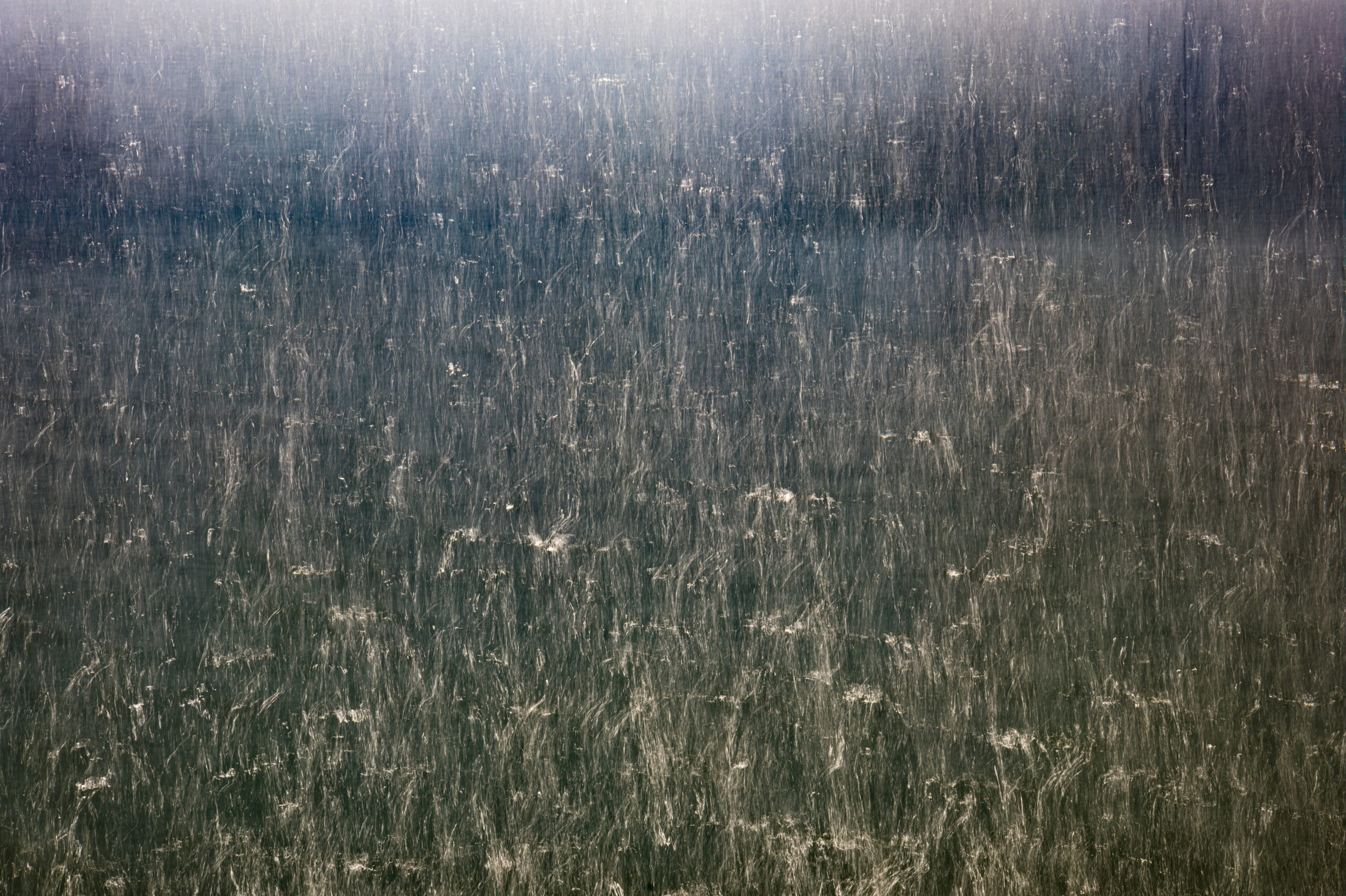
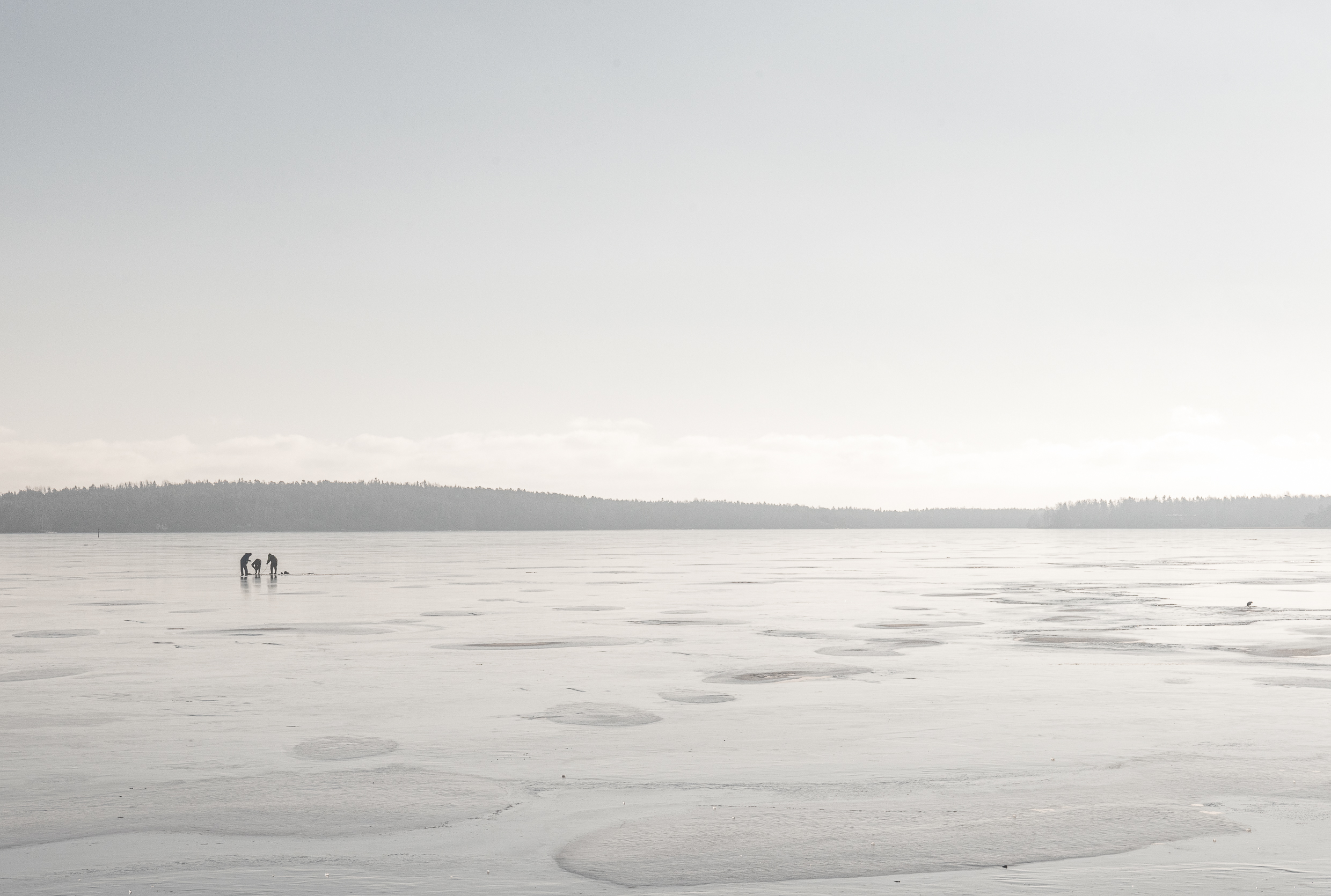
When you stop trying to achieve the expected effect and instead use camera movement to shape the mood, quieter photographs find their own space.
They rarely become popular, yet they evoke the subtle, lyrical atmosphere of a gray December day. Learning to appreciate days like this becomes a way to endure the darker season.
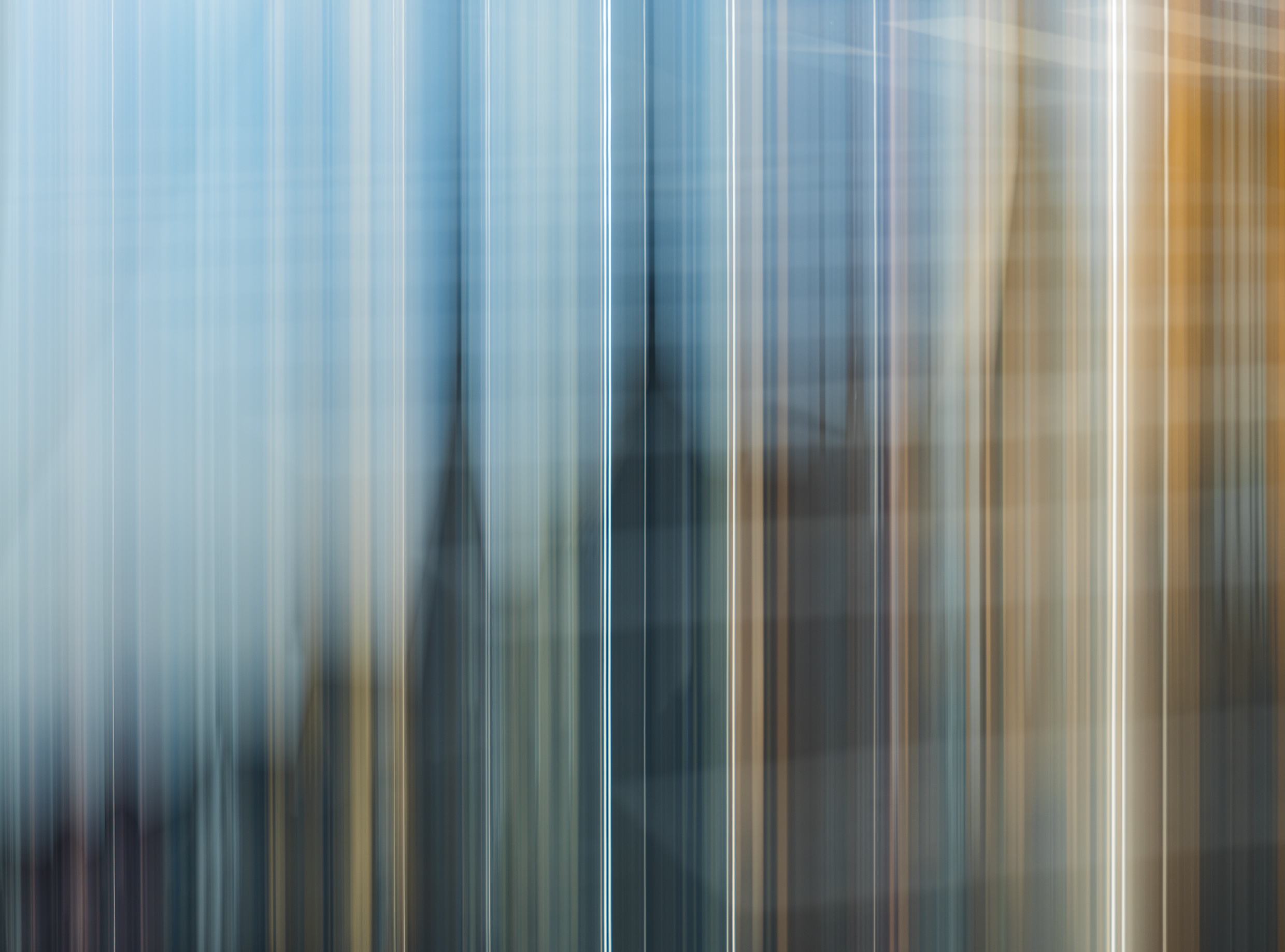
The source is an urban fragment where color and form are separated by a single camera gesture. A recognizable element, the zebra crossing, remains visible within the abstraction.
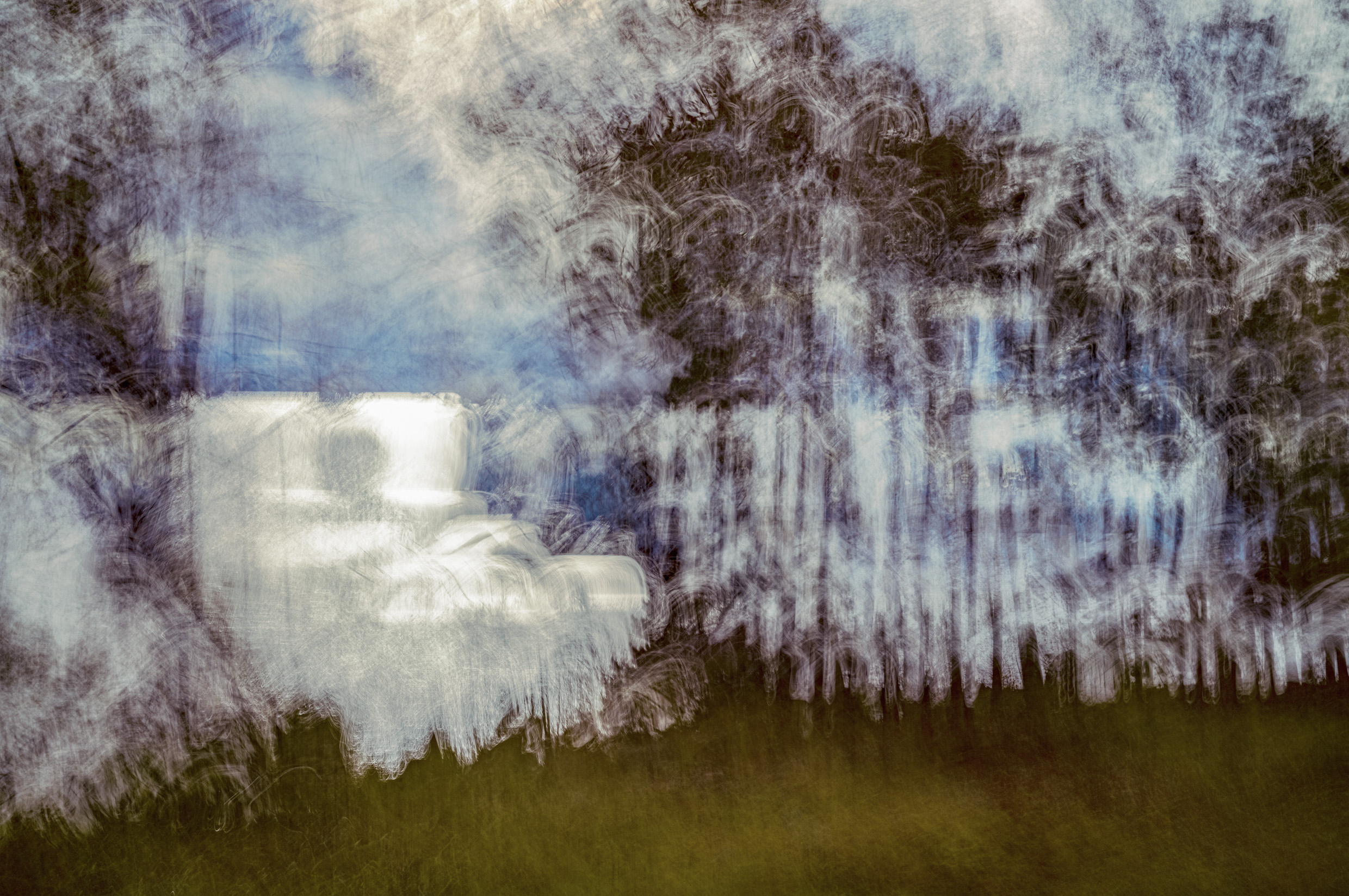
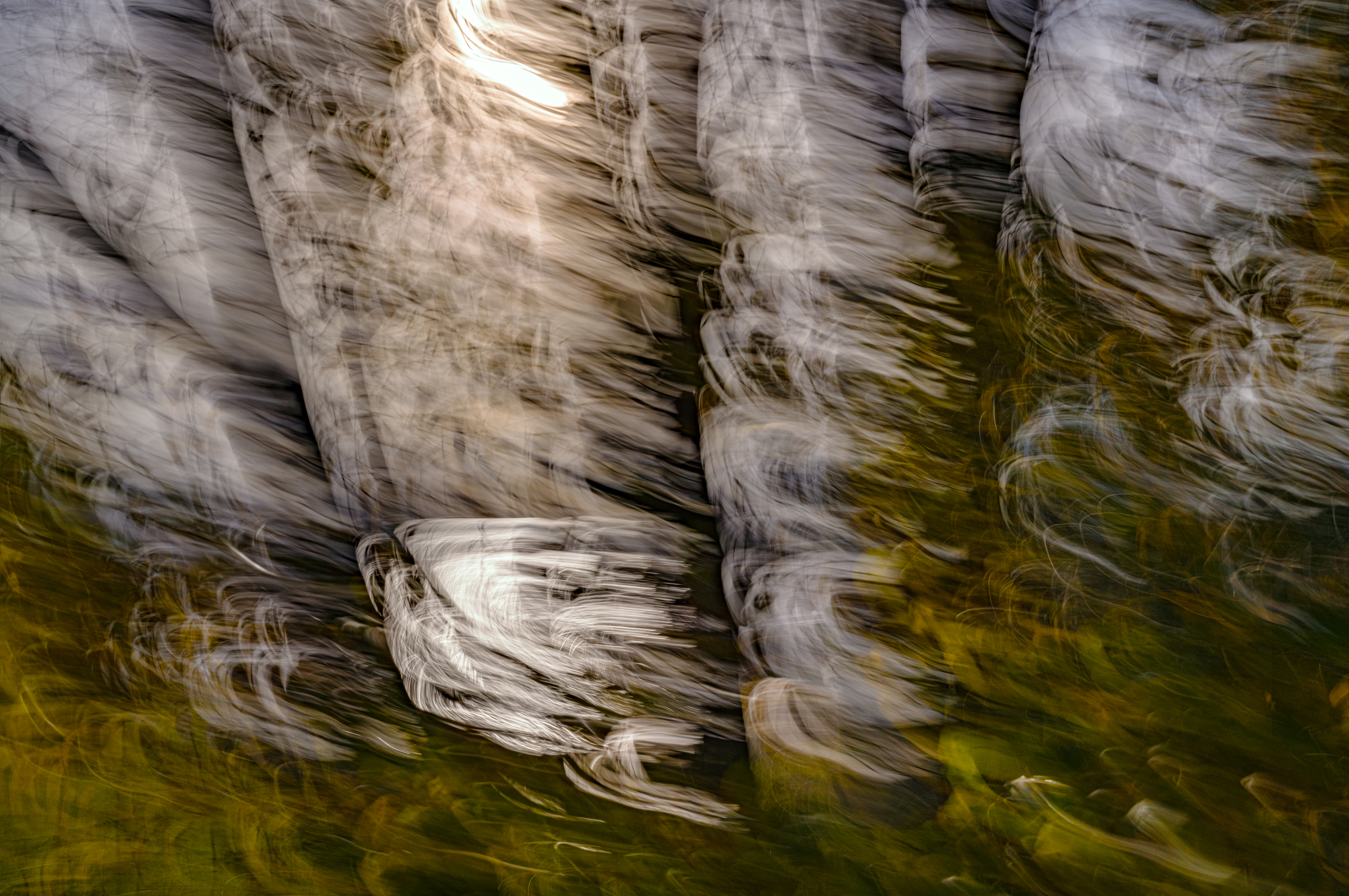
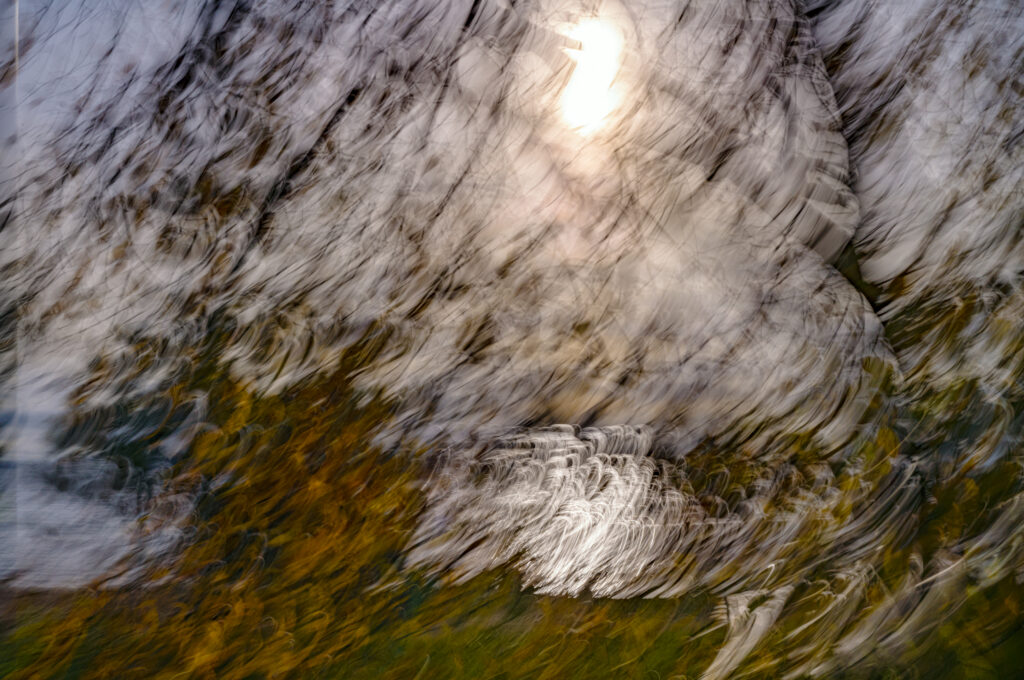
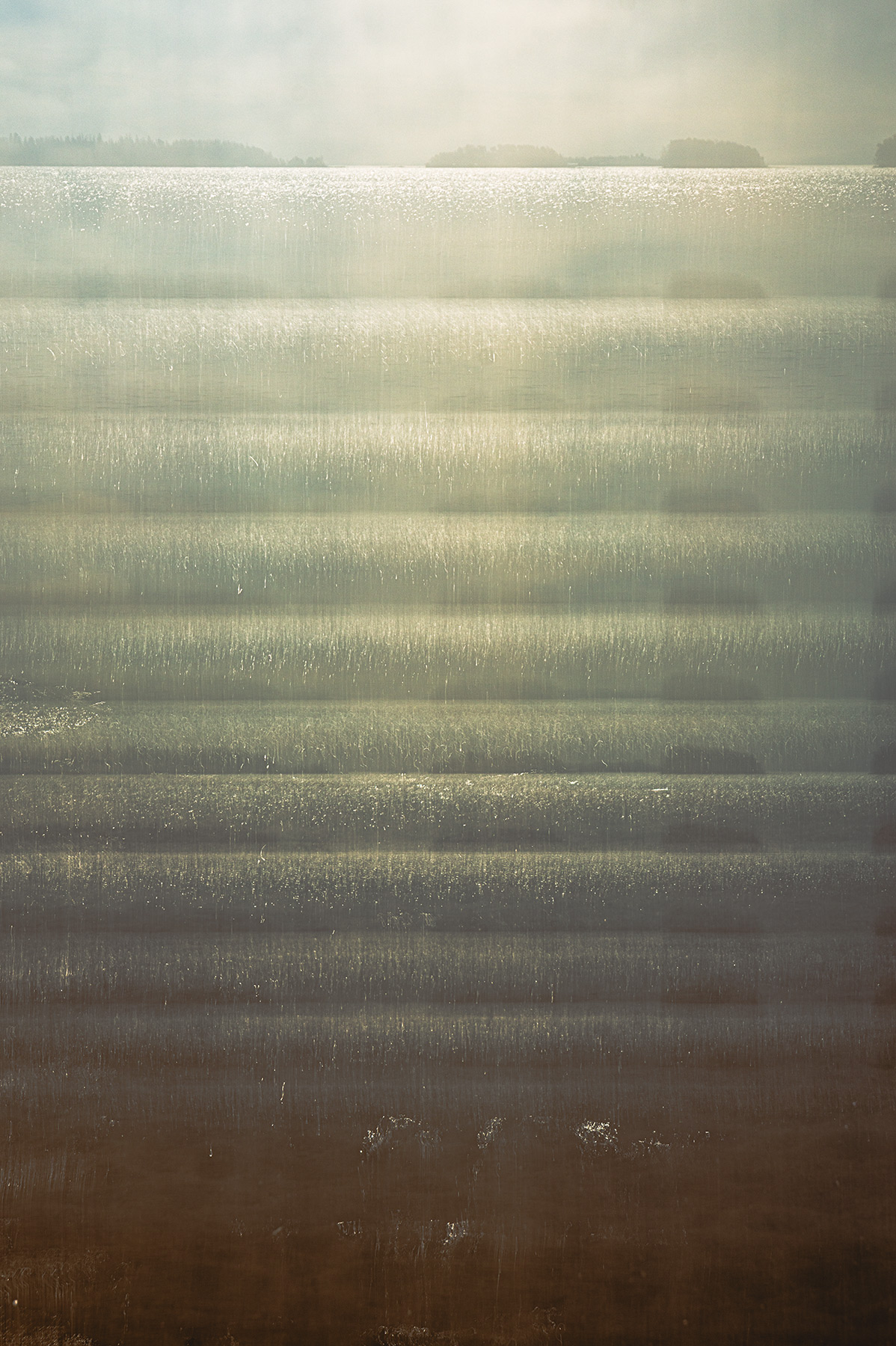
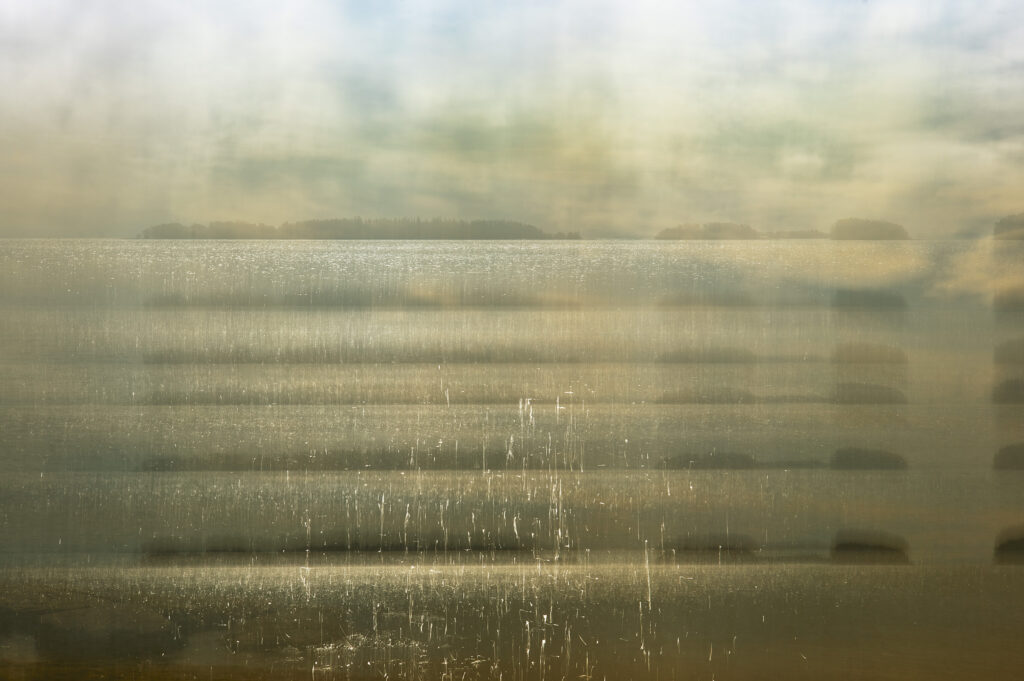
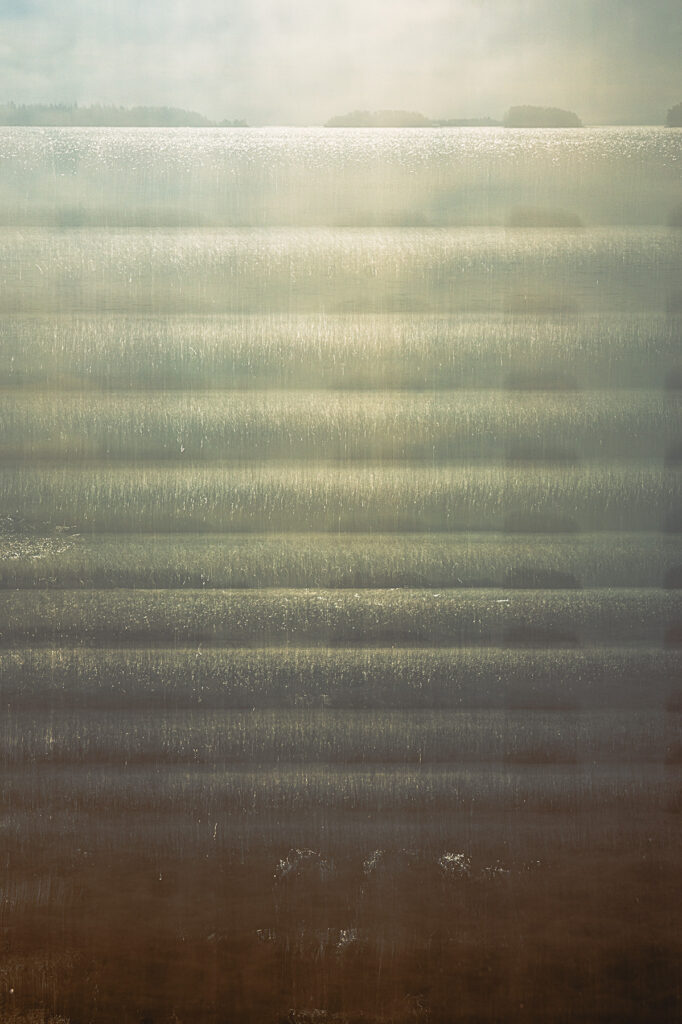
The images begin with an autumn coastal scene shaped by wind and direct sunlight. Light passing through air and vegetation dissolves the scene into a translucent field, where optical effects replace descriptive detail.
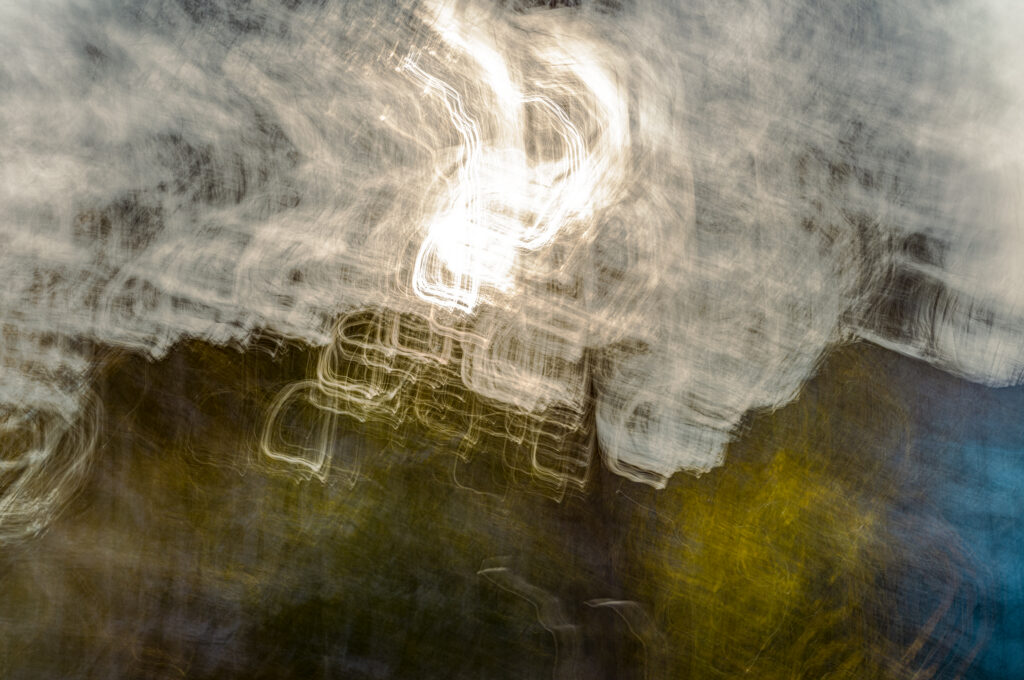
The image is formed entirely in camera through the precise alignment of the lens, filter, and camera position, turning what is typically considered an optical flaw into the core structure of the work.
What usually blinds the eye becomes here the very substance of the image: a way of seeing light itself, rather than seeing through it to the world beyond.
I was thinking of the tonal density and expressive simplicity of Gallen-Kallela and Halonen, alongside the clarity and transparency of Iittala glass. These references come together here in a black-and-white photographic abstraction.
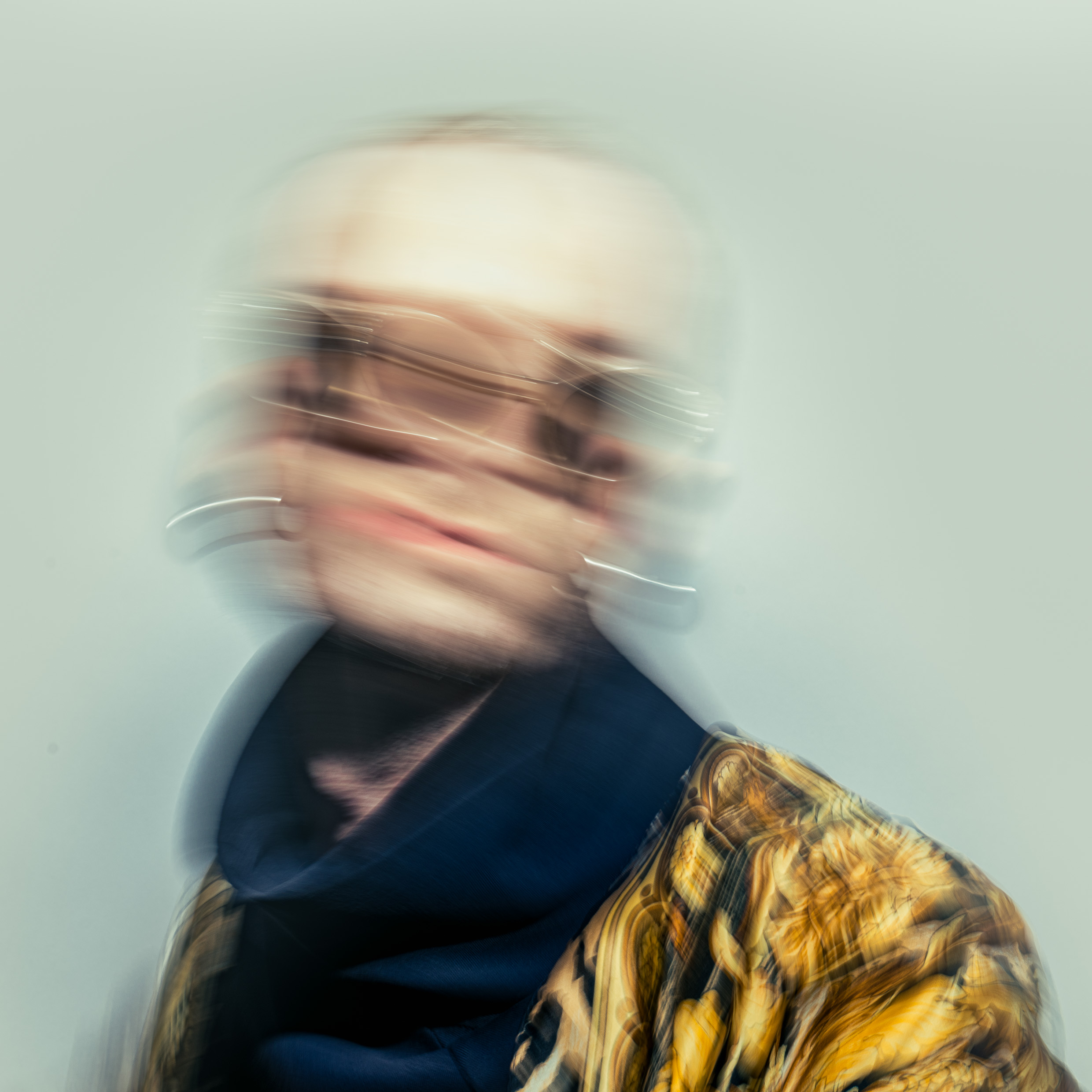
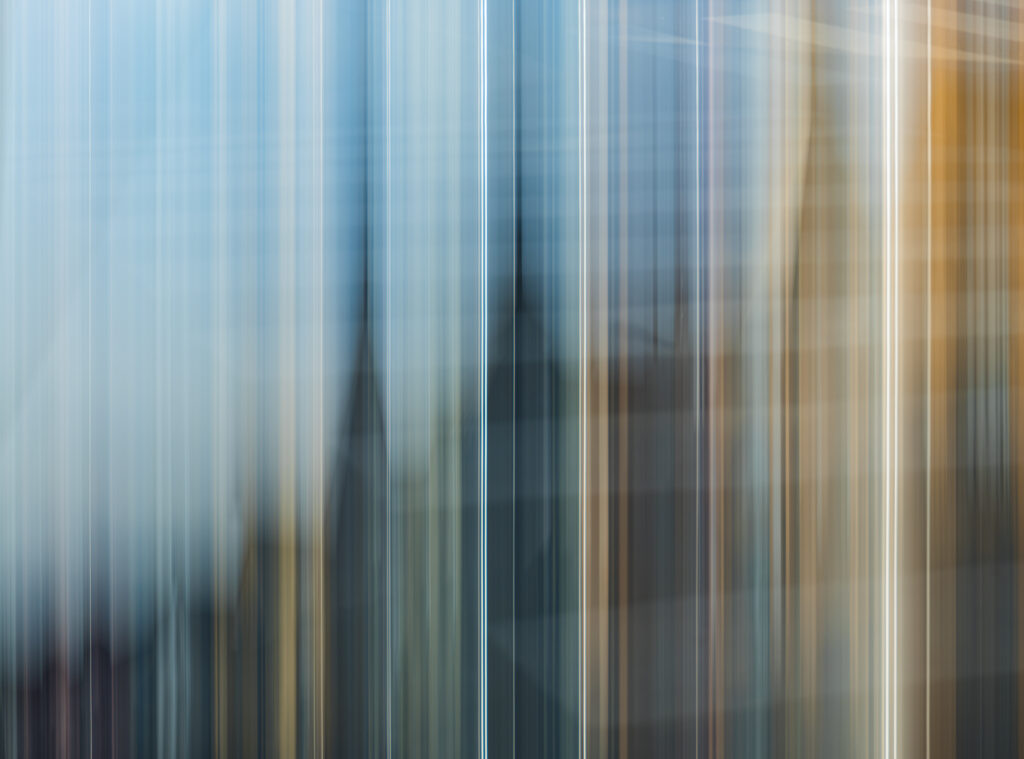
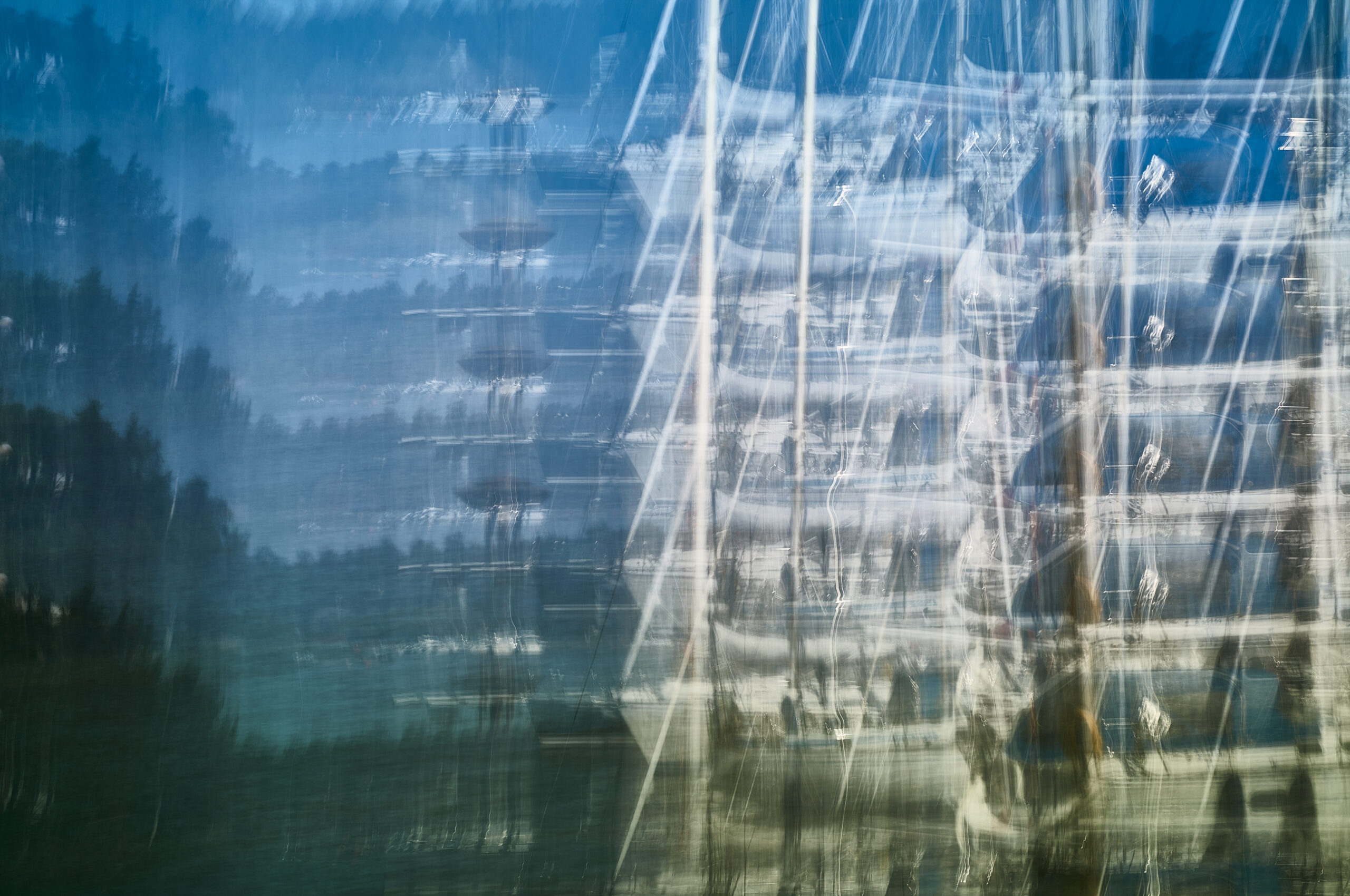
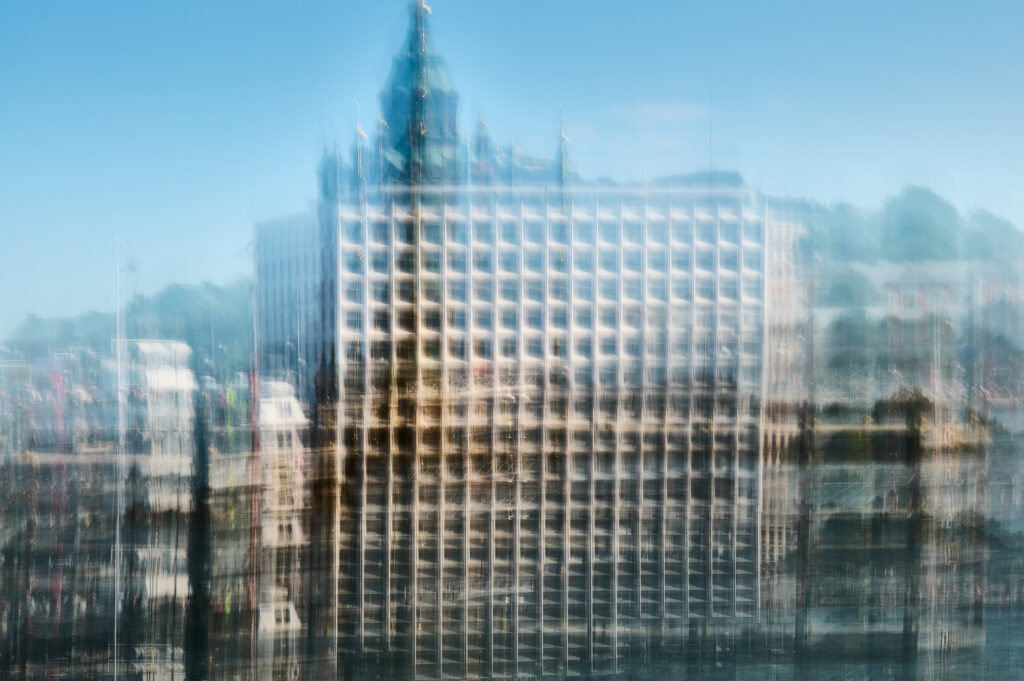
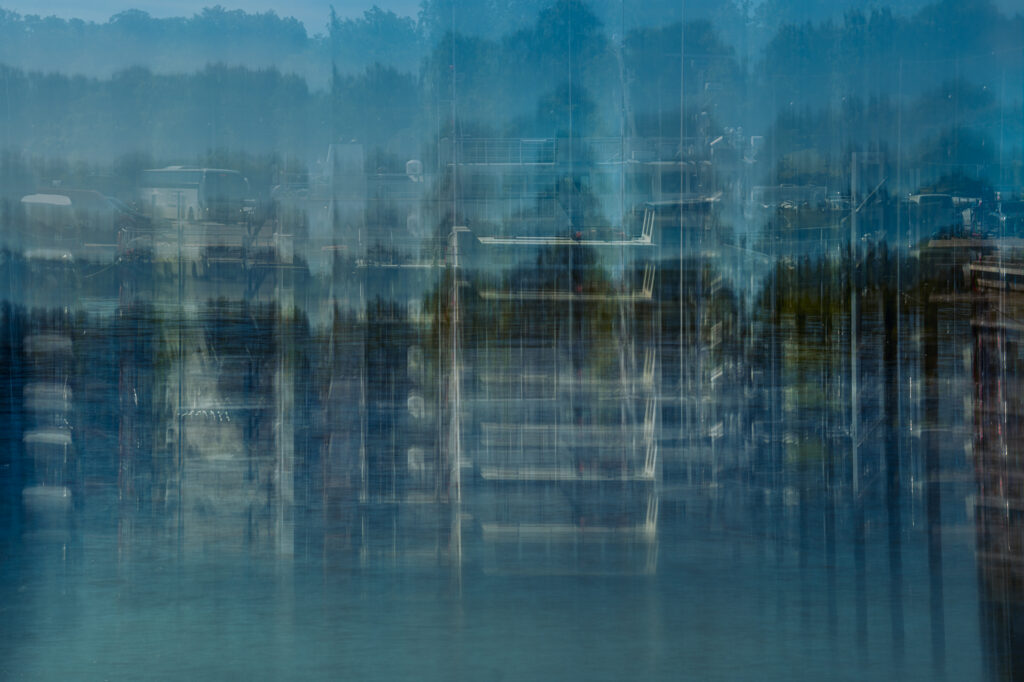
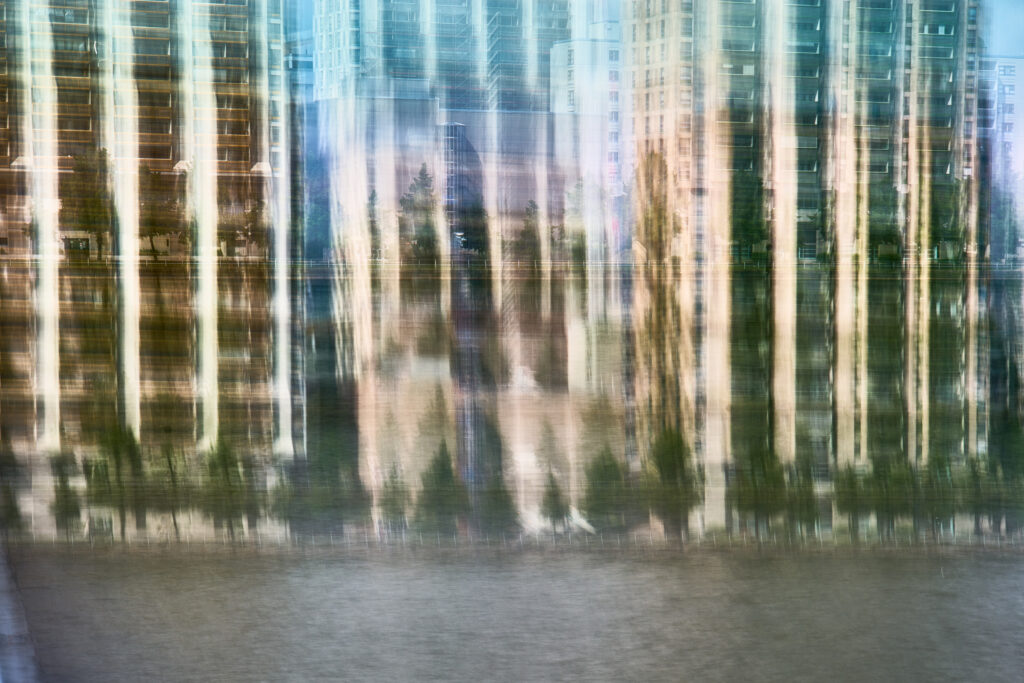
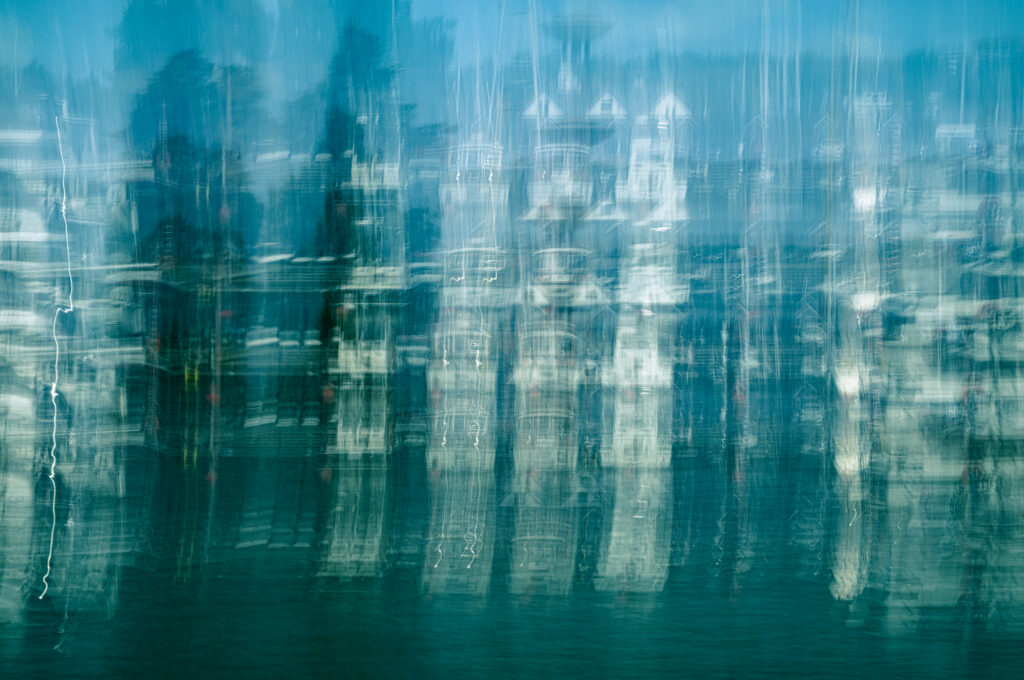
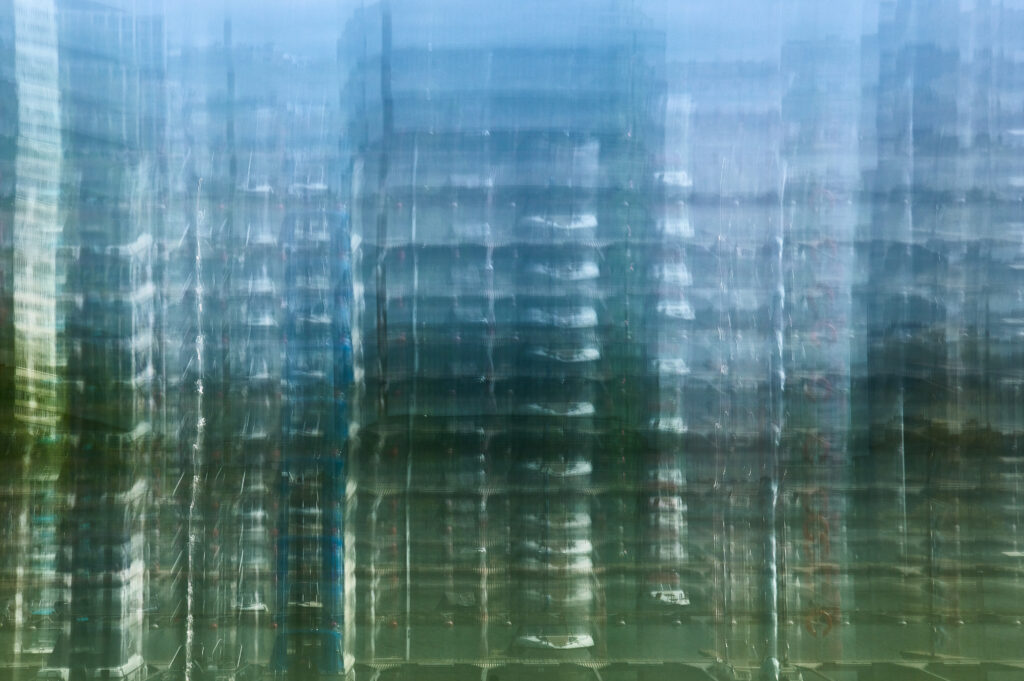
Disruptive Exposure explores vulnerability within the photographic act. A single, fragmented vertical gesture transforms familiar scenes into unstable, layered surfaces—not through multiple exposures, but through one continuous camera movement.
The process begins with places commonly perceived as comforting or iconic: harbors, facades, quiet cityscapes. These are usually photographed to preserve their clarity and order. Here, camera movement deliberately disrupts both.
Blur, shifts, and fragmented contours remain as visible traces of the gesture. Rather than correcting these “errors,” I allow them to become part of the image and part of its language.
This work does not position me as a master of representation, but as the initiator of disintegration. Photographing in this way becomes fragile, uncertain, and essentially human. Expression comes not from beautifying disorder, but from allowing vulnerability and uncertainty to remain visible.
In a culture increasingly shaped by automation and artificial intelligence, this vulnerability takes on another meaning. The photographic act remains physical and irreversible: a gesture made in relation to a real place at a particular moment.
Disruption becomes both a visual method and a question of authorship: what remains distinctly human when clarity, control, and technical perfection are increasingly easy to produce?
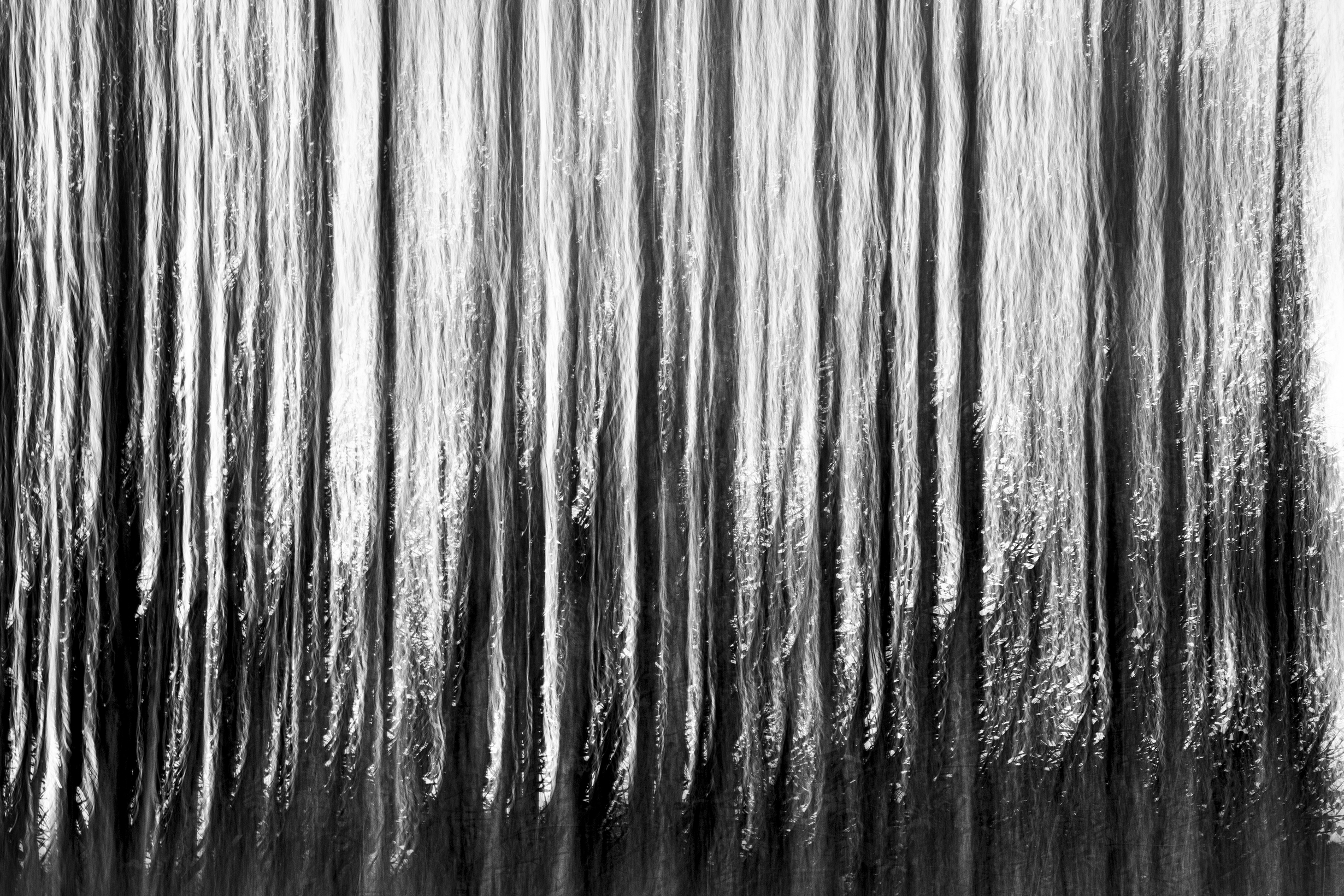
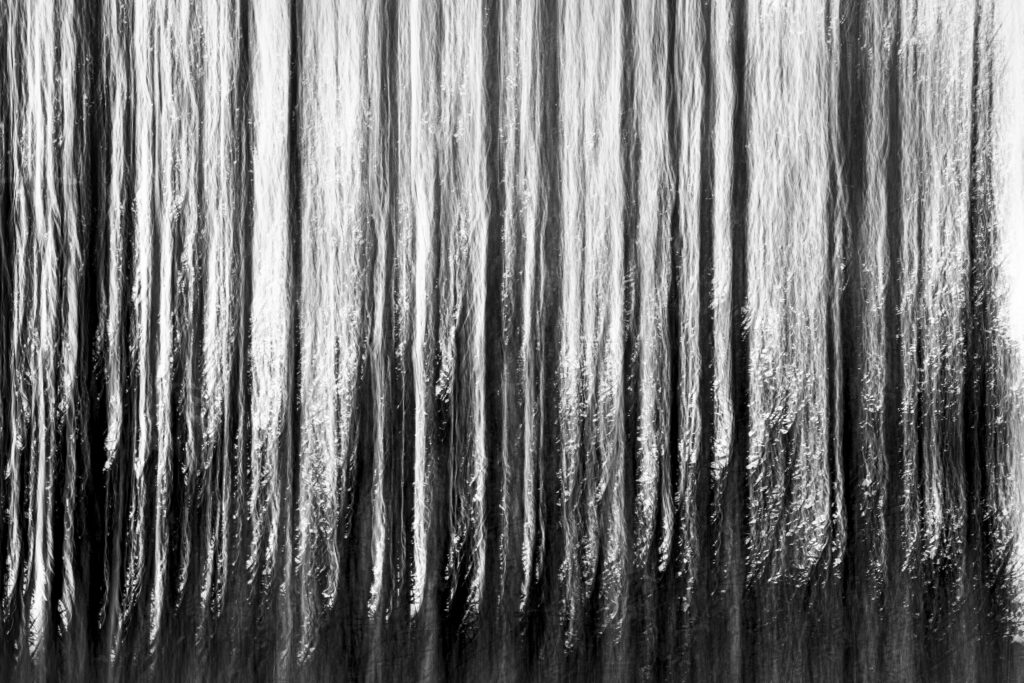
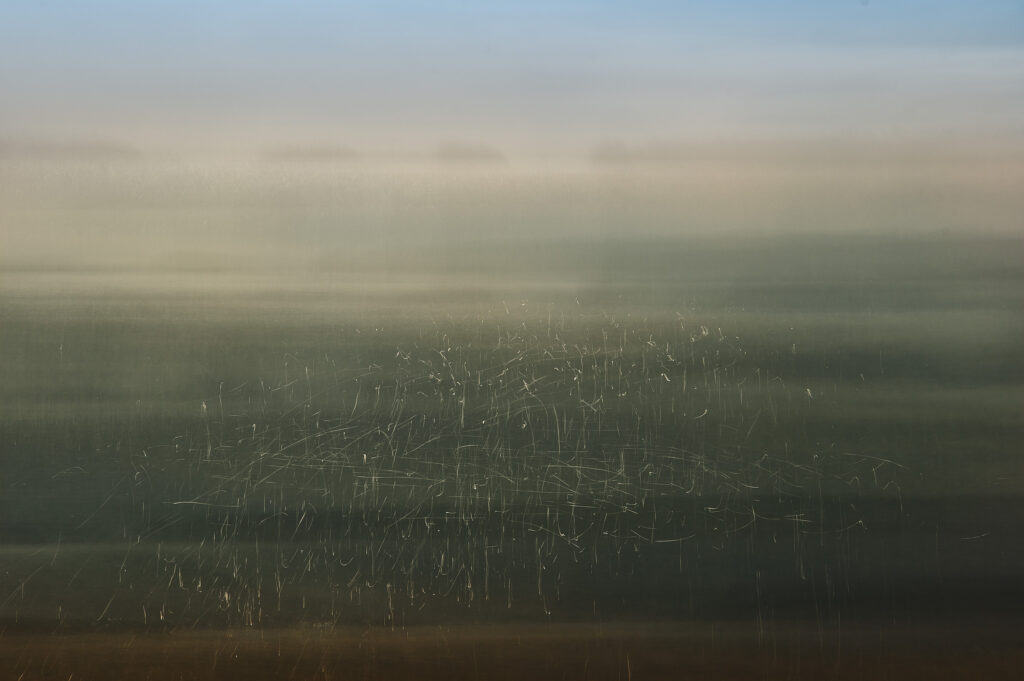
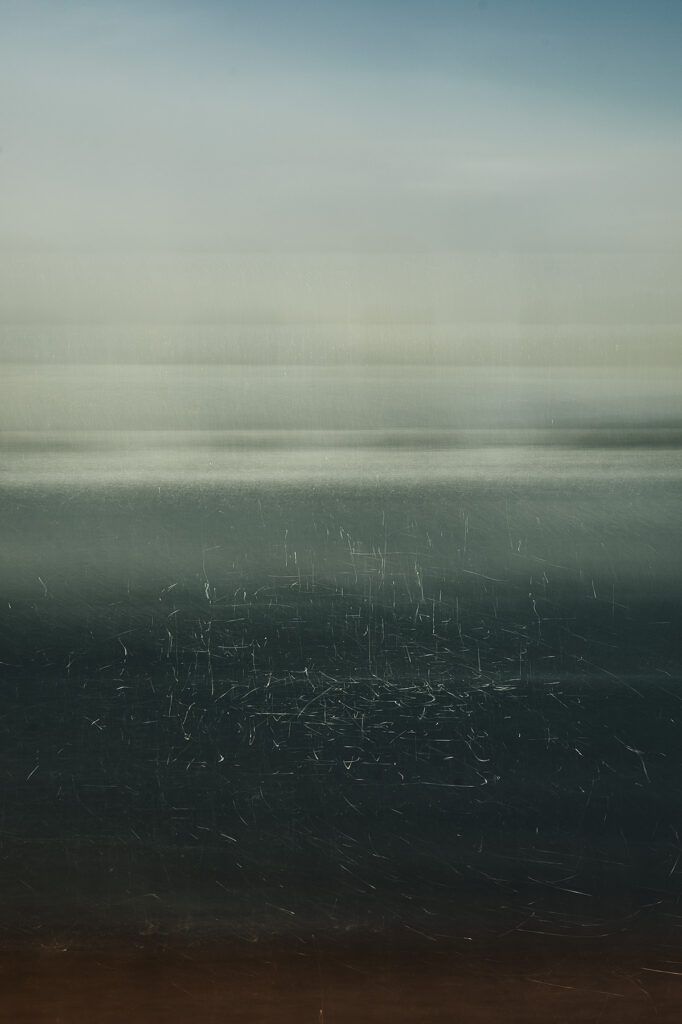
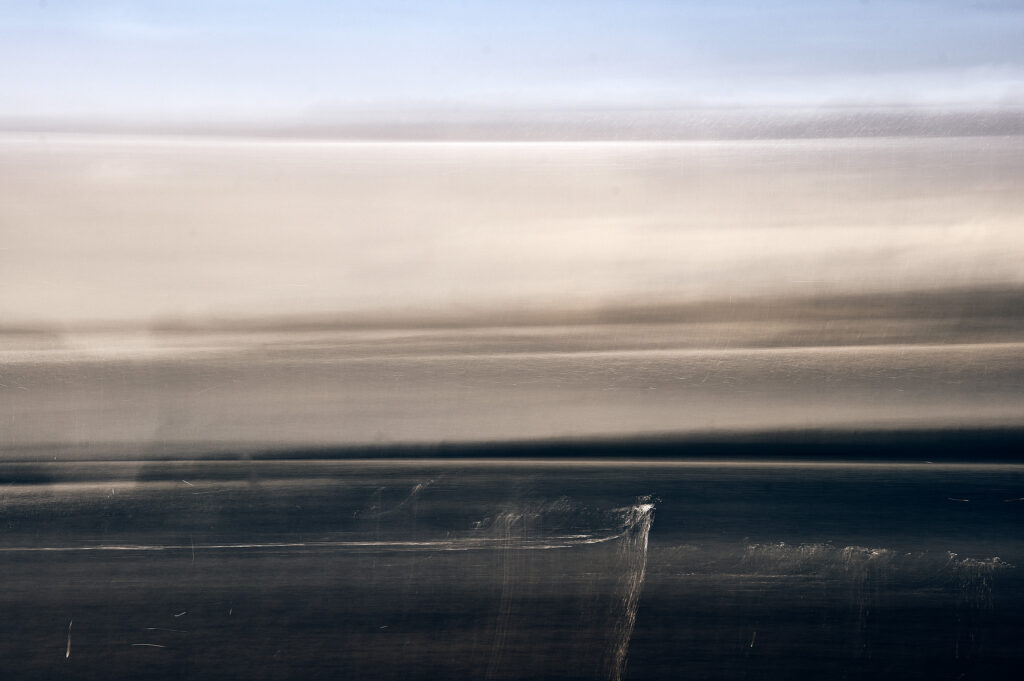
This series began with a question about the familiar notion of “beautiful” abstraction: why should abstraction be soft, fluid, and dissolving? Here, abstraction isn’t an escape from reality but a way of working with it through tension, tactility, and sharpness. This is abstraction with an edge, where form doesn’t drift; it cuts directly into perception.
These works explore how rhythm shapes perception. Tools previously used to achieve fluidity are repurposed to create tension, structure, and density. Instead of dissolution, there is a flash of form; instead of continuous flow, repetition and vibration.
The camera no longer moves smoothly. Its movement becomes sharp and interrupted, producing gestures that build into rhythmic structures, not a dance but the deliberate weight of a drumbeat: heavy, grounded, intense.
Light doesn’t simply illuminate; it scratches the surface like a burin cutting into metal. It gives the images rigidity, grain, and sheen, as if they were etched or worked with a dry brush. The photographic surface begins to suggest something physical and almost industrial.
Form doesn’t blur; it erupts. Repetition creates rhythm, and each movement of the camera remains visible as a physical gesture. Reality doesn’t disappear into abstraction. Through light, it scratches the image from within.
No.1 artwork from this project was selected by Der Greif – an award-winning contemporary photography organization – for the Guest Room feature What (Dis)Appears, curated by Jo Trujillo Argüelles and María Santoyo (published July 1o, 2025).
Both No.1 and No.3 artworks were also highlighted by Artsper curators and featured as “New and Remarkable” (May 2025).